Friday, 16 December 2016

The Jutes and the White Horse Invicta

Thumbnail

The Jutes Arrive in Britain
During the fifth century, the Britons invited an army of Jutes over to Britain to help defend against the Picts and the Scots. 
These Jutish warriors were led by the brothers Hengist and Horsa.
Within time, the Jutes brought their families over from Jutland, and they settled in Kent among the native Britons.
With them came the White Horse of Kent, known as the Invicta. This horse is rampant, standing on its hind legs with its front legs in a challenging pose.
The Jutes are said to have also settled in North Rhine-Westphalia, as the emblem of this region of Germany also has a rampant white horse, sibling of the Kentish Invicta.
The name Hengist most likely comes from the German word Hengst, meaning stallion.
And the name Horsa is from the old German word Hors, meaning horse. 
As we can see, our Kentish White Horse Invicta is characteristic of the Jutes who settled in Kent.
Kent Invicta
The name Invicta is said to have been given to Kent in 1066, after the Battle of Hastings, as William of Normandy, on advancing from Sussex into Kent, came to an agreement with the elders of Kent and promised to honour the Kentish laws, including the law on gavelkind, which assured that land ownership would pass from the parents to all the male heirs equally.
Whatever event led to William the Conqueror acknowledging the motto Invicta for Kent, it was proof that he did not conquer Kent.
 

Thursday, 15 December 2016

Angela and the English Church

Thumbnail

The English Church
Angela, my sister, researched the history of the Church among the English Folk.
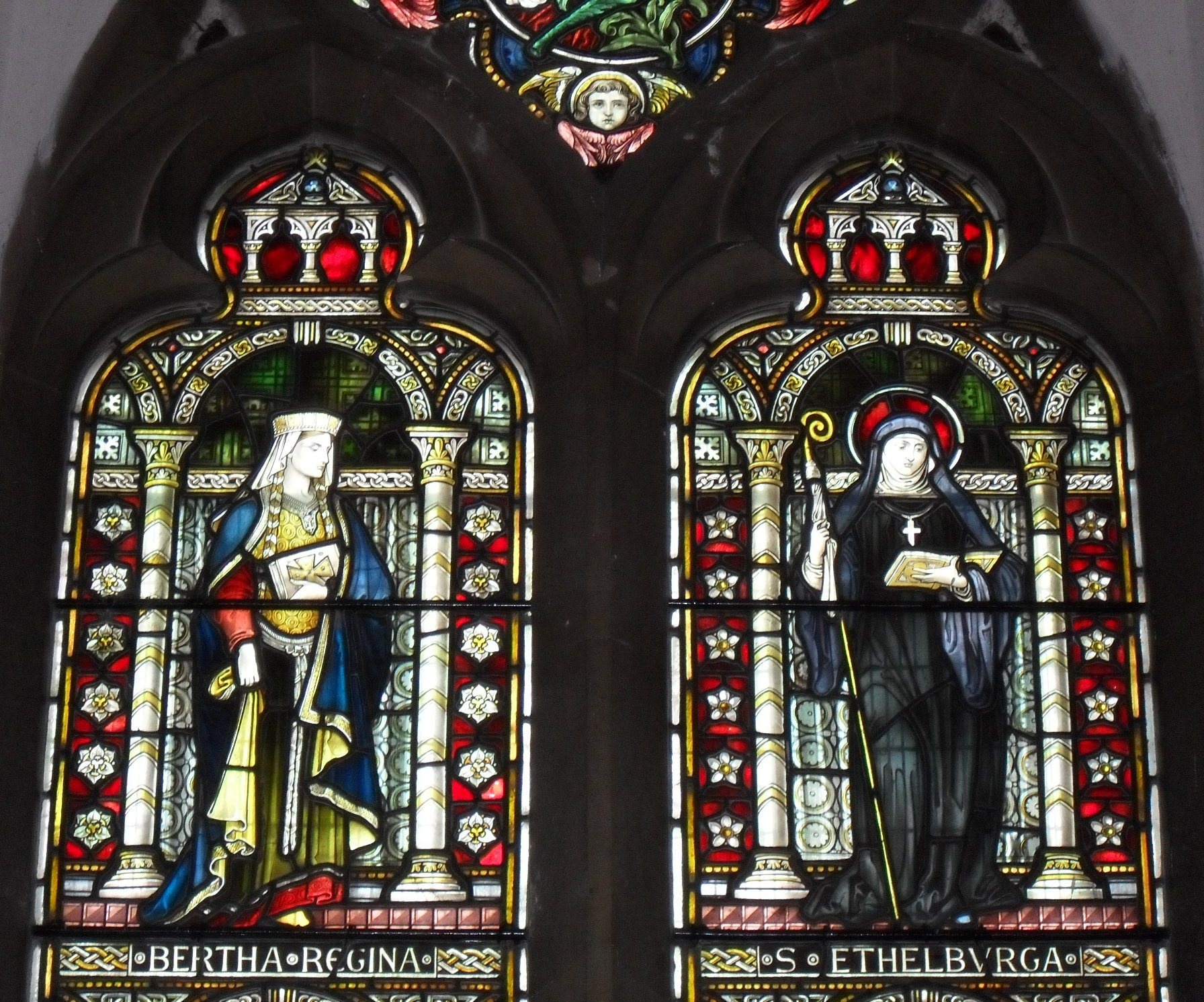
She found that King Ethelbert of Kent, who reigned in the second half of the sixth century AD, converted to the Christian Faith of his wife, Queen Bertha.
Queen Bertha had come to Kent as a Merovingian princess from the tribe of the Franks and had married the pagan Ethelbert, prince and heir to the Kentish throne.
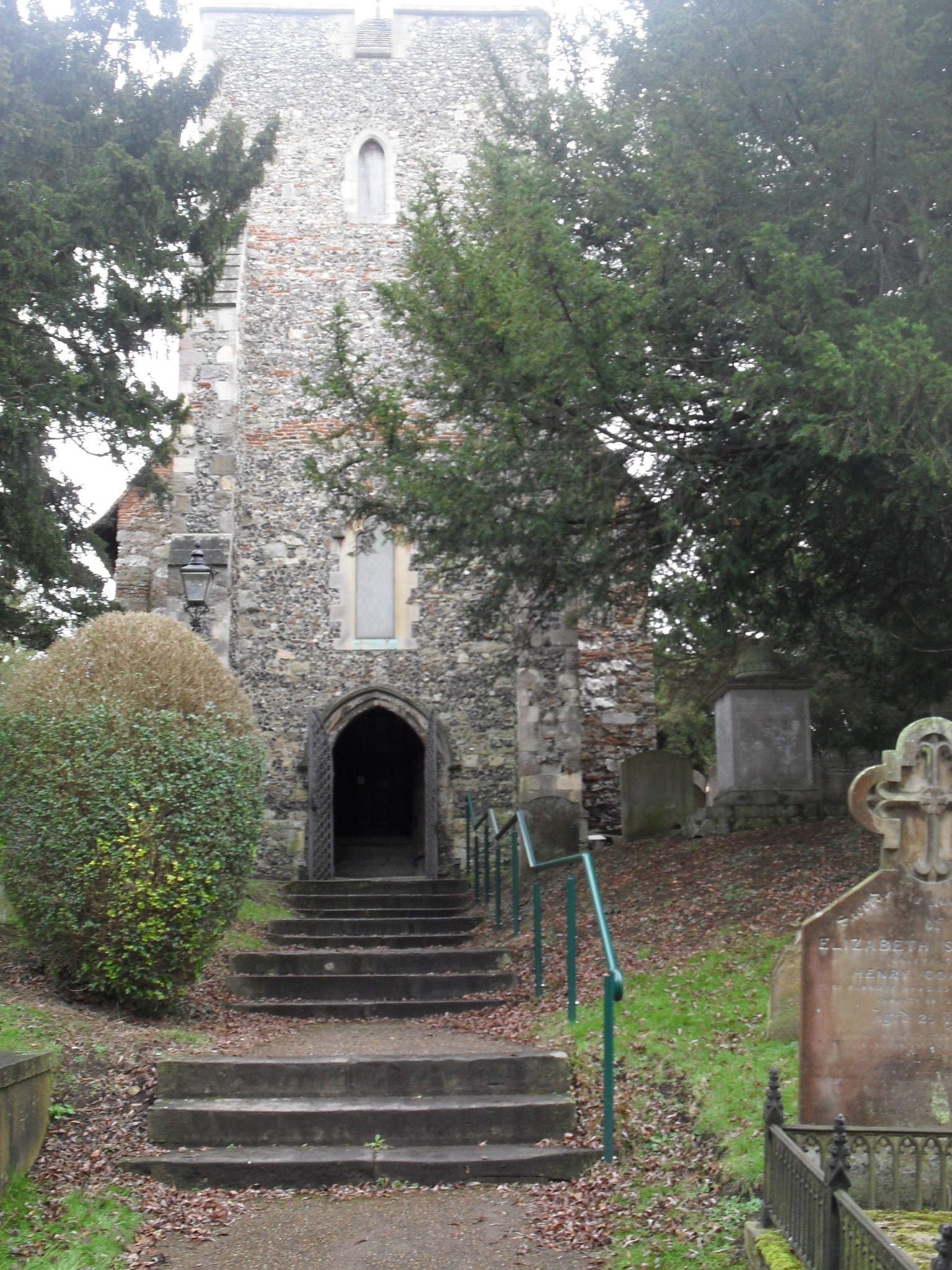
King Ethelbert later established within his capital, Canterbury, a church dedicated to Saint Martin of Tours. This is the first church to serve among the English Folk. It was established before the arrival of Augustine to Kent's shores.
Clearly, the English Church was conceived within the Spirit around 1,000 years before Henry VIII, and Canterbury's ecclesial history is proof of this.
Jesus the High Priest
Jesus is the High Priest of the English Church and he is its founder, not Henry VIII. From Heavenly Mount Zion, the Son of God guided the Gospel to the English Folk and thus our Church was founded.
Under English Law, the head of the Church in England is also the Monarch. As Jesus Son of God is the High Priest of our English Church, he is also our Monarch.
Even the UK Establishment cannot change King Cnut's essential law:
the tide cannot be turned.
Thus spoke the Folk unto the Monarch:
"as thou art the Head of our Church, lower not thine head nor remove thy face from our presence".
At this moment, a dispute arose betwixt Jesus God's Son and Henry's descendant.
From: The Great Controversy, the Folk and its King, Britannia Edition
 
Thumbnail
 

Tuesday, 15 November 2016

Avoiding an Unhealthy Diet

Fast Food Diets
Fast food diets have changed people's eating habits in the western world, with cheap ready-made meat and sugar-rich drinks being consumed in place of more traditional meals and beverages.

But fast foods often do not reveal the ingredients they contain, and therefore many people may be unaware of the amounts of fat, salt and sugar they are consuming.
 
The Time-Factor
One clue as to why people go for this kind of meal lies in the name fast food: a dish that is already prepared, heated and ready for eating.
Plenty of time is spared as no shopping is involved, and so bags of food needn't be carried through the town all the way to the door-step. There is no unpacking of shopping inside the kitchen. Vegetables needn't be cleaned and sliced, and wrappers needn't be disposed of. There is no need to stand in front of the oven and hot-plates tending to the cooking.
Pots, plates and cutlery needn't be washed and dried after the meal has been eaten.
 
The Cost Factor
Fast food is generally cheap as the ingredients it contains are produced using low-cost products. Meat burgers and sausages may contain a high content of fat and soft drinks contain added gas and sugar. Burgers and sausages are produced in enormous quantities in food-processing factories using machinery. The production method is cheap, and the resulting product is a minced and compressed mixture of meat and fat.
And the production costs for soft drinks are also very low.
 
External Appearance
Fast foods are usually presented as ready-made meals, and combined with the low cost factor, this has a tremendous effect on people's decision to opt out of a cooking session at home or a more expensive meal in a restaurant.
 
But whereas a steak or lamb-chop can be served with the fat, and this can be separated from the meat with knife and fork, a fast food burger or sausage can only be consumed with all its ingredients intact.
 
The combination of fast food with drinks produced from water - to which gas and sugar have been added - completes the diet cycle. Traditional drinks do not tend to be consumed with a typical fast food dish, whereas artificially sweetened drinks have an appealing effect owing to the gas they contain.
 
Calories and Nutritional Values
As fast food based on meat and animal fat does not visibly reveal the individual ingredients that make up the product, the consumer cannot know how to determine its nutritional value and the calories it contains. This, together with soft drinks, can result in excessive consumption of salt, saturated fat, total fat and sugar, excessively increasing cholesterol and diabetes levels within the body.

National Socialist Food Policy
http://angliannationalsocialist.blogspot.co.uk/2015/12/ensuring-food-for-britain-it-is-of.html


Friday, 16 September 2016

Jesus King of the English

The Gospel Came to England
When the Teutonic tribes settled among the Britons, their society was based on tribal origins. The Angles, Saxons and Jutes formed kingdoms in the areas of Britain where they had settled, one of these being Englaland, the land of the Angles of East Anglia. This name eventually came to define all the land that we now know as England.
Similarly, the name of the language spoken by the Angles, Englisc, was eventually used to describe the language spoken by all the Teutonic tribes that had settled in Britain.
 
Within time, the Church was conceived in the Spirit among the English Folk, at first in the Kingdom of Kent in the latter part of the sixth century, and again in the Kingdom of Northumbria in the first half of the seventh century.
It was a Merovingian princess, Bertha, wife of prince Ethelbert of Kent, who first brought the Gospel to the English Folk. Bertha came from the land of the Franks where her father, Charibert, ruled as king in Paris.
 
Ethelbert later succeeded his father, Eormenric, and became King of Kent. He converted to the Faith of his wife Queen Bertha and within his capital, Canterbury, he established the first place of worship to serve as a church among the English. Dedicated to Saint Martin of Tours, The building had formerly been used as a church by the Celtic Britons.
 
The English Church in Kent is the result of a royal marriage through which the Pagan king received the Word of the Gospel through his Christian wife.
    
English History May Not Be Rewritten
The history of Canterbury as the Seat of the Church in England starts with King Ethelbert and Queen Bertha of Kent, and it is testimony that the English Church of the South was conceived in the Name of the Son of God in the sixth century.
 
The history of York as another important Seat of the Church in England is evidence that the English Church of the North was founded in the Spirit in the seventh century, in the Kingdom of Northumbria. This came around when King Oswald of Northumbria invited Scottish and Irish missionaries from the Celtic monastic island of Iona into his kingdom.
 
The spiritual Conception of the English Church in Kent and in Northumbria came about through our Divine King the Son of God.
The coming One Thousand Year Reign of Christ over England assures us that we English are the Chosen Folk and that England is our Promised Land.
 
Our English Church is of Celtic and Teutonic origins, and it may never be replaced unless England's history were to be cancelled.
But then, what would they replace our history with?
What would they give unto our Folk in place of the One Faith?
And who would they call "our leader"?
Our only hope is in the coming Reign of Christ, King of the English.
 
One English Church
The Son of God was in Heaven before Adam was on Earth, therefore no nation or organisation can claim to have given origin to Christ. He does not present himself as foreign to the English Folk and so we are not obliged to surrender our Chosen status to another nation or to any kind of organisation.
 
Our English Church being spiritual, its doctrine is the Holy Scriptures, and as a spiritual place of communion it cannot be possessed by human authority or infiltrated by alien teachings.
No-one can claim possession over the Soul of our English Nation, therefore no human authority and no foreign nation can be placed between the English Folk and the High City.
 
The Third Person of the Holy Trinity is our Spiritual Mother who resides among the British Folk.


Sunday, 14 August 2016

Secret Elites Undermining Homogeneous Society

UN Working to Destroy Ethnicity
In June 2012, the BBC announced that the United Nation's special representative for migration, Peter Sutherland, had stated that the European Union should "do its best to undermine the homogeneity" of its member states.
 
In fact, in reference to each individual country that is coerced into being subject to the European Union, Peter Sutherland stated that the people "still nurse a sense of our homogeneity and difference from others, and that's precisely what the European Union, in my view, should be doing its best to undermine".
 
The BBC article went on to explain that Peter Sutherland attended meetings of the Bilderberg Group, describing this subversive circle as "a top level international networking organisation often criticised for its alleged secrecy".
 
According to Wikipedia, "Sutherland strongly advocates liberal immigration policies and mass unrestricted immigration into the European Union".
Wikipedia also notes that "he is silent on the immigration policies of other regions". The reason for this is not surprising, as many countries in the world have no policy at all in favour of mass immigration but actively prevent it in order to preserve their social identity.
 
And Wikipedia confirms the existence of an active policy to undermine society in Britain and Europe, noting that according to Sutherland: "the European Union should be doing its best to undermine any sense of our homogeneity and difference from others".
 

National Socialist Folk and Homeland
National Socialism is the only ideology that upholds the inherent right of the people to their own homland.
Transparency within a National Socialist country cannot allow for subversive elites to secretly scheme and plot and undermine society.
 
Enacting legislation from dark corners - such as the Bilderberg Group - and outside of a democratic mandate is inevitably the stab in the back which brings ruination upon a homogeneous society.
The folk is lied to, deceived, and made to pay for its own demise in order to be substituted by a new race. And as people would not vote for this, the agenda is imposed against our will.
 
This is one of the reasons why Brexit is being kicked down the road and Britain's borders are still wide open to mass immigration, with the prospect of nothing changing until a new referendum is held in several years time with a majority remain vote once the demographics have changed even more to the disadvantage of the indigenous folk.
 
An English Parliament
We need an English Parliament that will assure England's Sovereignty and forever free us from the power of the secretive elites who plot and scheme for our demise.
 
We do not have to pay one penny to the European Union and we do not have to keep our borders forced open to unwanted immigration.
And we do not need race quotas enforced on us in our own Country discriminating against the English on account of the colour of our skin. We do not have to tolerate the UK Race Laws that enable people to make us feel guilty for being English and exclude us from the right to work in our own homeland.
 
We have the God-given right to our own English parliament and one of its first acts should be to abolish the Race Laws that are being used to discriminate against indigenous English people because of the colour of our skin.
Otherwise, with each passing year, the Race Quotas will be changed in order to reduce the percentage of work places that can be given to ethnically English people, until one day we become a minority while having paid for it through taxes, public debt and unemployment.
 
The majority of English people voted to leave the EU in June 2016, but this democratic vote has been to all effect wiped off the table. In fact, nothing is happening to implement our democratic will.


Monday, 8 August 2016

Race Is Enshrined in English Law

Race Relations Act
In 1965, legislation was introduced to define relations between different races in the United Kingdom. The Race Relations Act was updated in 1968, and again in 1976, and once more in the year 2000 with the Race Relations Amendment Act 2000.
The Race Relations laws have since been incorporated in the Equality Act 2010.
 
As around 98% of immigration to Britain is centred in England, the Race Laws mostly affect England.
Before the advent of the Race Laws, people in England did not know that the colour of our skin would become relevant in legislation. We never had an issue owing to the colour of our skin. We needed no legislation that placed the spotlight on our skin's colour.
 
"Male, Pale and Stale"
A former member of the Black Police Association described the MET (Metropolitan Police of Greater London) as coming across as "male, pale and stale".
And Sadiq Khan, shortly before becoming Mayor of London, announced he was prepared to campaign for a change in the law to reduce the number of ethnically English people who can join the local Police Force in London.
 
In an article dated 24 July 2015, the Independent states that Sadiq Khan will call for affirmative action to change the status of the London Police Force, even to the point of calling for legislation "introducing quotas to alter the RACIAL balance of the force".
 
As we can see, England is particularly affected by the Race Laws, much more than any of the other constituent countries of the Union, and the implications of these laws are stacked against the indigenous folk.
 
So long as these Race Laws exist in England, the introduction of law-enforced race quotas is always going to be among us and it will always be in a polemical manner. The indigenous people are going to be confronted year on year with an ever dwindling percentage of Race Quota work opportunities, and we will each and every time be made to feel guilty about it.
 
Article from the Independent 24 July 2015:


Saturday, 6 August 2016

English Ethnic Identity

Anglo-Celtic
The English are Anglo-Celtic. The name Anglo is from the Angles who gave their name to England and refers more generally to the Saxons and the Jutes too.
The name Celtic is from the Celts that inhabited Britain at the time of the arrival of these three Teutonic tribes and who in many areas integrated with them.
 
In Britain, people are at times asked to state their ethnic or racial identity when filling in forms. On these forms, the ethnic term English is often substituted with the more racially sounding option White British.
The latter refers to a wider racial definition, as in belonging to the British Race, whereas the former denotes the specifically English ethnicity that is part of this race.
 
Whereas the census in England gives the option to describe oneself as ethnically English, forms from other offices tend to offer the term White British. On some forms there is the option to describe oneself only as White, referring to a much broader racial definition that goes beyond being ethnically British.
 
As we have seen, the official wording used in the identification of the indigenous population living in England makes reference to both race and ethnicity. Some people prefer to identify along racial lines, others along ethnic lines, but there is a grey area between the two.
 
The major ethnic difference between the English and the other indigenous populations of the British Isles is that these latter are more generally of Celtic stock. Even then, in England there are some areas where the local population has almost entirely Celtic roots, as in Cornwall.
 
Race and Ethnicity
The term race can have a specifically tribal connotation, such as belonging to the Angles, Saxons, Jutes or other Teutonic tribes, or to one or more Celtic groups.
In this sense, the term Anglo-Celtic is the correct definition for the English, considering that the word Anglo indicates the various Teutonic tribes that moved to parts of Britain and settled among the Celts, or at least among those Celts who remained in what later became England.
 
Genetic identification through tribal origin gives the closest fit to racial identity, whereby the reference is to one or more tribes belonging to the same original ethnic folk.
In this sense, Angles, Saxons and Jutes are part of the original Teutonic folk, while Scots, Welsh and Irish are largely part of the original Celtic folk.
 
The terms racial and ethnic can even be interchangeable, as seen when referring to an original folk from which different tribes descend speaking similar languages and having a similar culture.
Ethnicity in fact is defined not only by racial origins, but also cultural and linguistic characteristics that have accumulated over centuries and even millennia.
 
In England, the prevalence of the English language over the Celtic led to the use of the term Anglo-Saxon in reference to the English.
However, the term Anglo-Celtic is the correct description of both our English and our British origin as we descend from Teutonic tribes and from the Celtic Britons.
In essence, though, Anglo-Celtic and Anglo-Saxon both correspond to being English.
 
The British are racially akin to northern and western Europeans owing to common Teutonic and Celtic roots.
Due to this racial and ethnic affinity, English people look favourably at the concept of union with the other indigenous populations of the British Isles: the Scots, the Welsh and the Irish, and are generally inclined to favour close economic and cultural ties to northern and western Europe.
 
Nationalists that are racially aware tend to consider wars fought between nations of similar racial background as brother wars rather than as patriotic confrontations.
They see such wars as a net loss to the overall cause of racial nationalism and consider the elitist circles to be the instigators. World bankers and politicians are often identified as being responsible for plotting conflicts between brethren nations.